Welcome to day 37 of 40 craft lessons.
A book might have an emotional core and emotional truth, yet still fail to resonate. One reason is that the character’s feelings and world feel far away from us, and we don’t feel connected to their experience.
In picture books, this often happens when characters are unrelatable, especially when the book becomes preachy. Sage on the stage. The character turns into a placeholder for lessons, rather than a person through whose eyes and mind we experience the story. Adults wouldn’t listen to this, let alone children.
We, as readers, emotionally engage with a story when we can relate to the characters and recognize something of ourselves in their inner world.
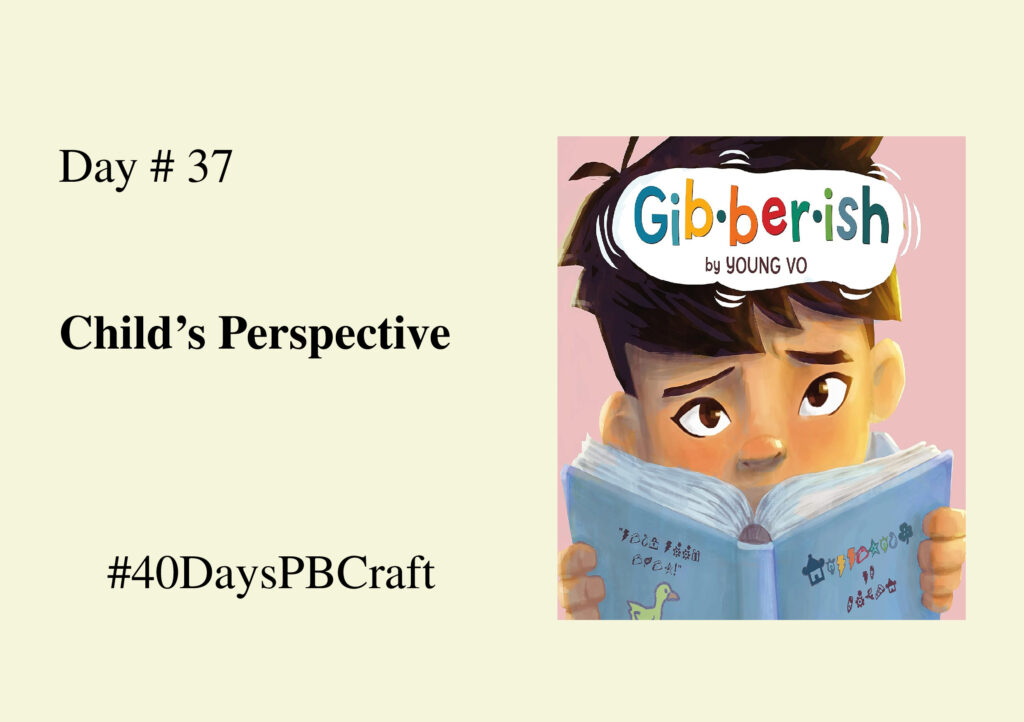
Gibberish (2022, Young Vo) immerses the reader in the world of a child who is new to a country. Others speak, but he hears only gibberish. The book captures moments of confusion, isolation, and overwhelm from the child’s point of view.
When I first read the book, it resonated with me deeply. As an immigrant, I recognized every moment the main character experienced. The panic of not having the words to explain. The frustration of not being heard. The explosive joy when everything is finally okay. These feelings, so familiar and so intense, are captured in a 40-page picture book because the author takes us fully into the child’s world.
This deep alignment with the child’s point of view is what makes the story emotional and unforgettable. When readers are allowed to see and feel through a character’s eyes, emotional resonance becomes possible.
What seems small to adults can feel enormous to a child. Capturing those feelings in words and shaping them into a story is a task that demands careful craft.
Hope reading this blog post has given you new ideas. See you tomorrow for Day 38.