Welcome to day 25 of 40 craft lessons.
Picture books that focus less on action and more on the feelings and emotions of the characters are called quiet picture books. They are the perfect medium for discussing social-emotional learning and other challenging topics with children. That said, the lack of action doesn’t mean the main character is just sitting around, thinking about this and that endlessly. That would be a boring book—not a quiet book.
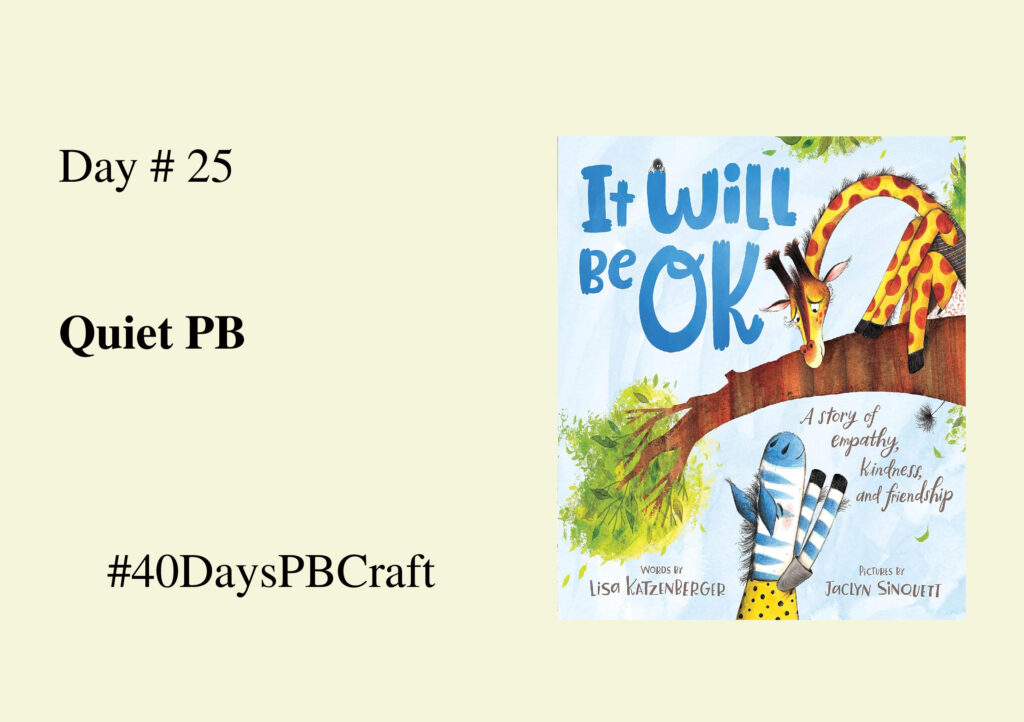
So how can you spot a quiet picture book? Often, the cover design and the pages give you clues. The illustration is usually simple, soft, and bright, featuring only one or two characters. The text is sparse, giving young readers time to absorb and reflect on the book’s message.
It Will Be Ok (2021, Lisa Katzenberger, Jaclyn Sinquett) tells a story of a giraffe who is scared of spiders. The giraffe sits atop a tree and refuses to come down. His friend, a zebra, listens and waits until the spider leaves, and the giraffe comes down. By the end, the giraffe learns that the spider is scared too, and he waits under the tree for it. The story shows an emotional journey, from fear to empathy and support.
In quiet picture books, the character arc is the main engine of the story. Without action-packed sequences or dramatic events, the narrative relies solely on the main character’s emotional growth and transformation. That’s why planning the character’s emotional journey should be the first step in writing a quiet book. Before considering what happens on each page, the writer should focus on how the character changes from beginning to end.
Map the feelings first—the shifts in emotion will guide the story and give it depth, subtlety, and resonance.
I hope reading this blog post has given you new ideas. See you tomorrow for Day 26.