Welcome to day 15 of 40 craft lessons.
Not all picture books should be funny, nor should they only tackle simple topics. We need picture books on every subject, especially the tough ones. In fact, those are often the most needed, particularly these days. But writing about complex topics for young readers is tricky. The story shouldn’t sound harsh or didactic. This is where specific literary techniques become indispensable tools in your writing toolbox.
Allegory is one such tool. Remember how much George Orwell said—and showed the reader—about corruption in Animal Farm without saying it outright.
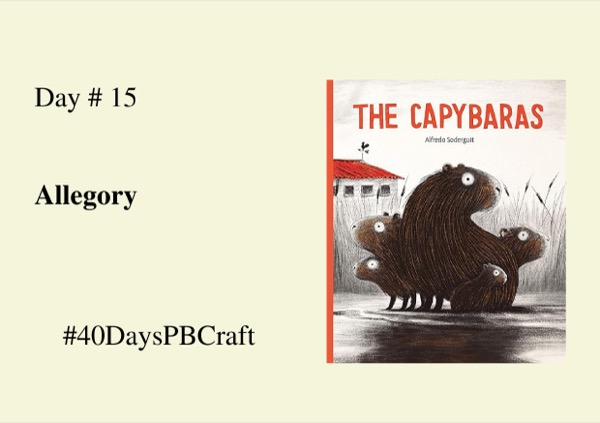
If you wonder whether using allegory in a picture book is possible, I invite you to read The Capybaras (2021, Alfredo Soderguit). A superb example.
Because of hunting season, a family of capybaras seeks refuge among a group of chickens. The chickens view them as hairy, wet, and too big. The capybaras are unwelcome. Doesn’t it sound familiar?
The Capybaras is also another example of how animal characters can work better than humans.
Stories like these remind us that picture books can hold profound truths beneath simple words and images.
Hint: Don’t confuse allegory with metaphor.
A metaphor is a single building block. It creates meaning by saying one thing is another. An allegory uses the entire narrative structure of the story—plot, characters, setting— to convey a deeper meaning. The surface story is meant to be decoded.
I hope reading this blog post has given you new ideas. See you tomorrow for Day 16.