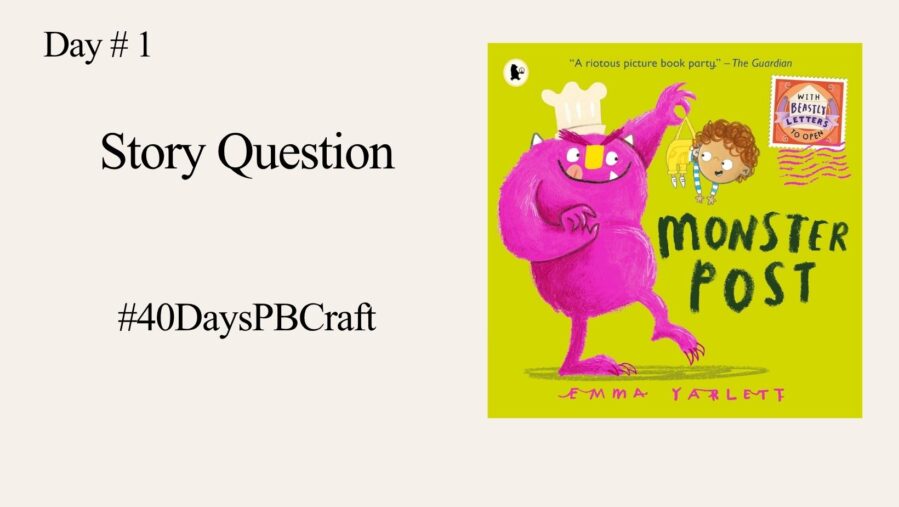
Story part 1

      This blog post is not a summary of STORY. Claiming otherwise would be the height of naivety. STORY is a very dense book. You wouldn’t digest it by reading bits and pieces before falling asleep or on the train. It demands full concentration. Yet, every single sentence of the book is worth […]

Story part 1 Read More »

Lead; hook reader’s attention

      What is a lead?  How do I begin? Theoretically, I knew that the first lines (lead) have the crucial job of drawing readers into the book and capturing their attention. But practically, how to do so? If writing the first lines isn’t more difficult than writing the rest, it isn’t easier either.

Lead; hook reader’s attention Read More »

Slant in nonfiction

Slant in nonfiction

  I knew one of my nonfiction manuscripts was mission something—something that I couldn’t identify! The topic was interesting, about a space telescope. The text wasn’t wordy; less than 800 words. The language level was appropriate for my target audience. Yet, I felt something crucial was missing, SOMETHING that should be in the blueprint of

Slant in nonfiction Read More »

Wrong Terms about Narrative Structure

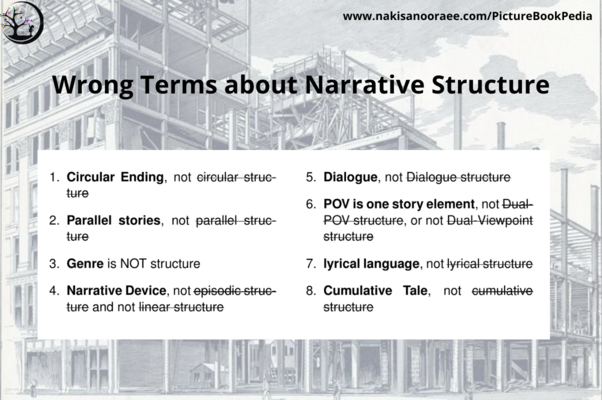
                Previously, in this blog post, I discussed the Narrative Structure. In a nutshell, the most used Narrative Structure is the Three Act Structure (Beginning-Middle-End). The term Narrative Structure is self-explanatory: a Narrative Structure constructs the Narration. Yet, this simple concept has been prone to many misunderstandings. When

Wrong Terms about Narrative Structure Read More »

Nature- and STEM-based Informational Fiction Picture books

What is Informational Fiction?  Informational fictions are stories with the main purpose of conveying information and facts. They have the Narrative Structure as each story should have. Therefore, they are NOT non-fiction. They are NOT narrative nonfiction (biography or memoir) either. Because informational fictions have fictitious characters with made-up dialogues which narrative non-fiction doesn’t have. 

Nature- and STEM-based Informational Fiction Picture books Read More »

Postmodern and Metafiction picture books

Postmodern & Metafiction Picture Books

            Postmodern literature After World War II, a new movement in literature began: postmodernism.  Postmodern literature rose to prominence in the late 1950s and early 1960s. This form of literature is characterized by the use of metafiction, unreliable narration, self-reflexivity, and intertextuality. Postmodern Picture Books The classic postmodern picture book

Postmodern & Metafiction Picture Books Read More »

Narrative Structure analysis

  Why analysis of Narrative Structure?  I found out that I cannot fix the Narrative Structure’s problems for two reasons:  I am emotionally attached to my work. I don’t have enough experience to logically analysis my work. Thus, it is better to start practicing dissecting the works I have no emotional connection with—other people’s work!

Narrative Structure analysis Read More »

What is Narrative Structure?

            When you want to write a story, how would you order the events? What about the characters? When and how would you introduce them to your reader? What about dialogues? How much of the character’s conflict reveal initially? And many more questions which seem daunting and impossible to tackle.

What is Narrative Structure? Read More »

Change Character Arc

              In the previous blog post, we overviewed the meaning and the types of Character Arcs. This blog post is about positive-change and negative-change Character Arcs in picture books. Positive-change arc A classic example of learning the positive arc is A Christmas Carol (1843) by Charles Dickens. Initially, Scrooge

Change Character Arc Read More »