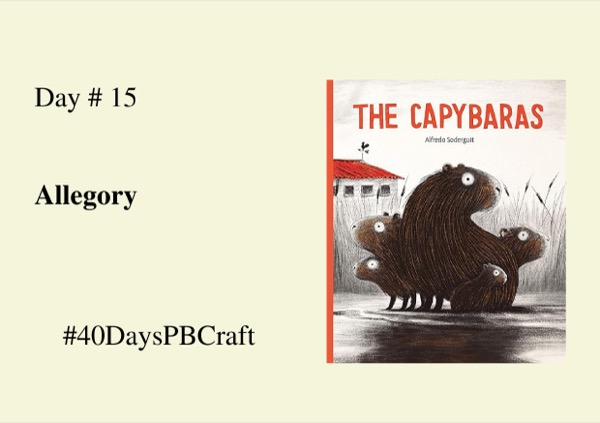
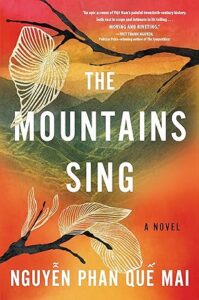
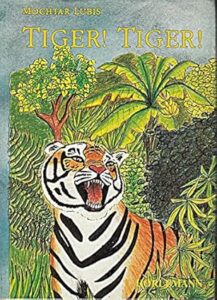
Day 15: Allegory

Welcome to day 15 of 40 craft lessons. Not all picture books should be funny, nor should they only tackle simple topics. We need picture books on every subject, especially the tough ones. In fact, those are often the most needed, particularly these days. But writing about complex topics for young readers is tricky. The […]

Day 15: Allegory Read More »

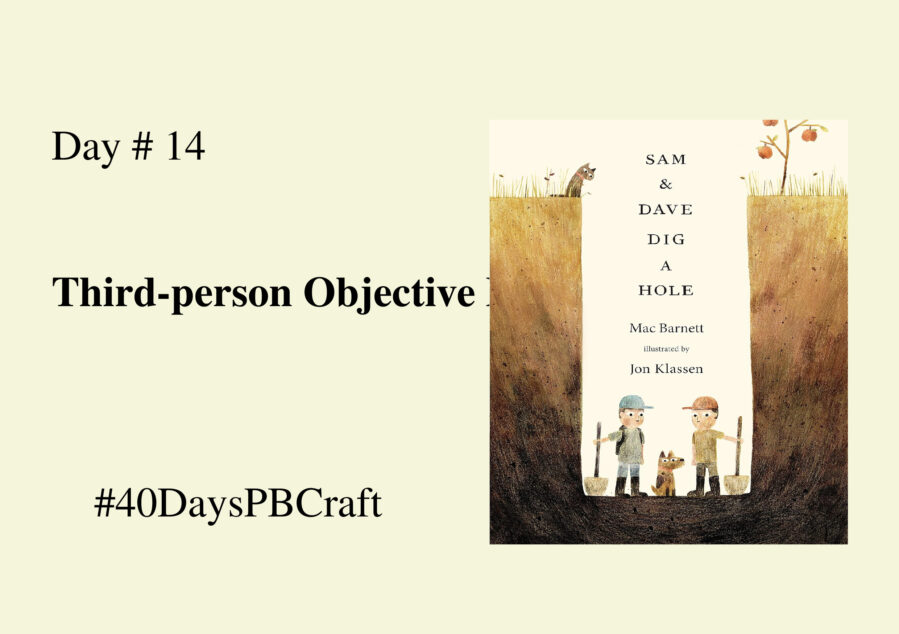
Day 14: Third-person Objective POV

Welcome to day 14 of 40 craft lessons from 40 picture books. Imagine a fly-on-the-wall telling you a story! That’s third-person objective POV in a nutshell. If you like a fancier term, some call it “camera-eye POV.” This POV shows the story through an outside observer who reports only actions and dialogue. It doesn’t peek

Day 14: Third-person Objective POV Read More »

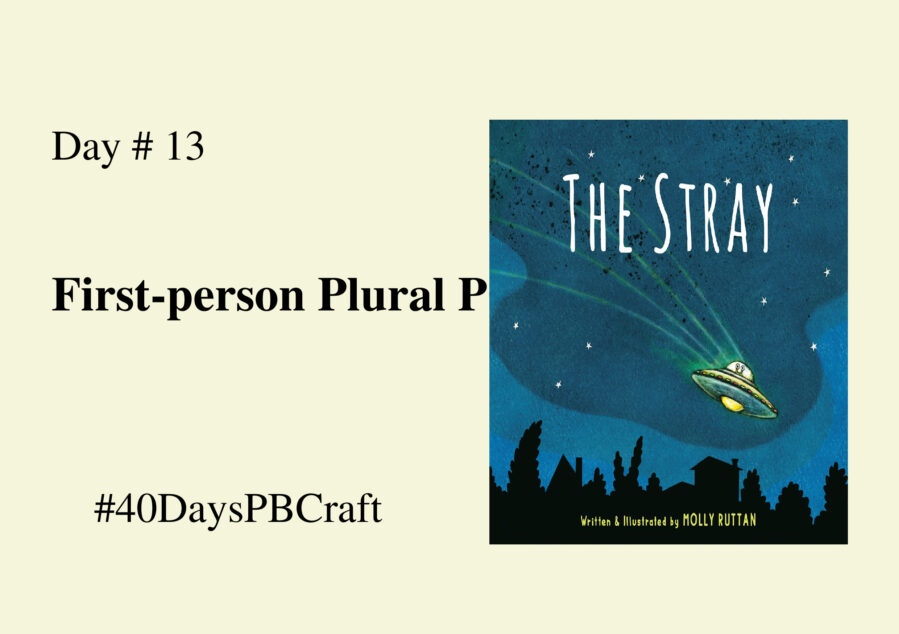
Day 13: First-person Plural POV

  Welcome to day 13 of 40 craft lessons. If second-person POV sounds unfamiliar, what would you say about first-person plural POV (“we”, “us”)? It’s strange, isn’t it? But once upon a time, the first-person plural was the natural choice for oral storytelling. Many cultures told stories not from an individual’s perspective but from the

Day 13: First-person Plural POV Read More »

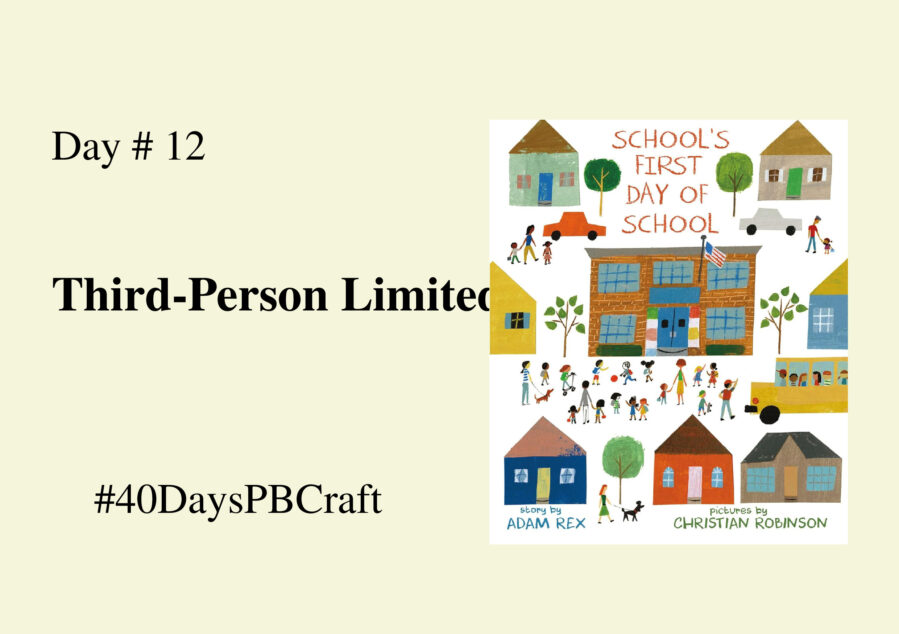
Day 12: Third-Person Limited POV

Welcome to day 12 of 40 craft lessons from 40 picture books. Third-person POV (“she,” “her”) is versatile. It can be an omniscient, god-like POV that knows everything—thoughts, feelings, and experiences of all characters—and moves freely between multiple characters’ minds. We don’t see the omniscient POV very often anymore. What we usually encounter is either

Day 12: Third-Person Limited POV Read More »

Day 10: First-person POV

Welcome to Day 10 of 40 craft lessons from 40 picture books. Choosing the best Point of View (POV) for a story is one of the trickiest decisions writers have to make. Many confuse the narrator with POV, so let’s start there. The narrator is the entity telling the story: a character, an object, an

Day 10: First-person POV Read More »

Day 9: Unreliable Narrator

Welcome to Day 9 of 40 craft lessons from 40 picture books. A narrator brings us, readers, into the story world and honestly shares events and thoughts. Well… narrates, yes. Honesty? not necessarily. An unreliable narrator doesn’t lie maliciously. They genuinely misunderstand or misinterpret a situation. And that’s exactly what makes them such a versatile

Day 9: Unreliable Narrator Read More »

Day 8: Inanimate Narrator

Welcome to Day 8 of 40 craft lessons from 40 picture books. What could immerse the reader better in the story world and give a clearer view of it than a narrator from within that world? That narrator isn’t necessarily a person; it can be an inanimate object, and we see this abundantly in picture

Day 8: Inanimate Narrator Read More »

Day 7: Story Stake

Welcome to Day 7 of 40 craft lessons. One of the most popular pieces of writing advice is “raise the stakes.” And one of the most misunderstood ones! For me, that advice went in one ear and out the other. Stakes are for adult thrillers, right? I don’t write in that genre. So why would

Day 7: Story Stake Read More »

Day 5: Character Arc

Welcome to Day 5 of 40 craft lessons from 40 picture books. Many terms in storytelling are confusing. Luckily, “character arc” is one of the clearer ones. Throughout a story, either the main character changes (dynamic arc) or the main character changes the world (flat arc). In both cases, the story revolves around that change.

Day 5: Character Arc Read More »

Day 4: Animal Characters

Welcome to Day 4 of 40 craft lessons. For a long time, animal characters have dominated children’s books. In recent years, human main characters have become more common. So, when is it still better to use animal characters? It’s tempting to choose animals simply because they’re cute. But cuteness alone isn’t enough to make a

Day 4: Animal Characters Read More »