
I will write here later

I read this book merely because of its title. My reasoning was that when an author is so careful with the title, the story will most likely be good. And it was not good, but brilliant.
Seven resin collectors
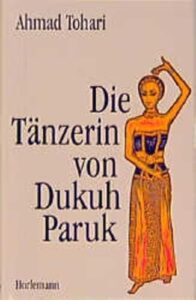
The story happens in a small, impoverished fictional village called Dukuh Paruk in the middle of Java Island. The main character, the 14-year-old Rasus, is in love with an 11-year-old girl, Srintil, whose grandfather believes she has a talent for Ronggeng—the Javanese dance. Moreover, in Rasus’s imagination, the girl is a replacement for Rasus’s mother, whom he had lost in childhood. A Ronggeng dancer isn’t a simple entertainer. The dancer is considered a sacred vessel for the village’s ancestral spirit and is expected to be available to the men of the village! I am not sure if it is comparable to the “sacred prostitute” in the temples that we read in the ancient Sumerian stories.
I read the first book in the trilogy in German—Die Tänzerin von Dukuh Paruk. Sadly, the other two volumes aren’t available to buy. In English, the trilogy is published in one volume with the title “The Dancer”.
The central conflict of the story is that Rasus has to emotionally put up with the tradition that everyone in his village believes in or benefits from. Rasus grows out of this calamity; he criticizes his village and its culture. In a nutshell, the story is the classic archetype: a boy becomes a man.
Tohari’s writing voice brings this archetype to life, especially his descriptions of nature and animals, which immerse me in the atmosphere of a Javanese village. The main theme of the story is the battle between tradition and humanity. In spite of the dire atmosphere in the story, it is very optimistic. Poverty and tradition cannot kill the humanity in Rasus.